Low-Income, High-Debt Program for Student Borrowers Starts in July

When I first heard about the Public Service Loan Forgiveness (PSLF) program that cancels student loandebt after 10 years for nonprofit workers, I wasn’t that excited. My thinking was that many student loans are on a 10 or 15 year repayment schedule and the savings wouldn’t be that substantial.

Income Based Repayment Calculator

Income Based Repayment Calculator

I changed my tune big time when I learned about a second program called Income-Based Repayment (IBR) that works in tandem with public service loan forgiveness. Designed to assist low income/high debt student borrowers, IBR lets people making AmeriCorps/VISTA/grassroots nonprofit-level wages make student loan payments as small as 0-$5 per month (based on income) and those payments count toward the 10 years needed for borrowers to get their larger debt forgiven.

The reason I write this now is that the Income Based Repayment program begins next month. If you are interested, first learn more about it, then search for it on your lender’s website and apply for the program online.

Finaid. org offers a really great calculator that shows how much you might save (or not) using these programs versus a standard loan repayment program. Even if you’re income is higher than average for the nonprofit field, the program could offer substantial savings.

I also prepared a two-page draft document on the information most relevant to members serving in AmeriCorps or VISTA. Like I said, this is a draft document and I will be revising and simplifying it as my understanding of these programs evolves.

You can also take a look at this post about the College Cost Reduction and Access Act that offers some basic facts and resources.
Connecting Service to Employment for Members of All Abilities

Participating in national and community service is one way for people with and without disabilities to gain valuable experience and skills toward employment. The National Service Inclusion Project is currently looking for success stories from service members with disabilities about how his or her service experience has linked them to full or part time work. If you are a service member with a disability who would be interested in sharing your story of your transition from service to employment, please submit your story here.

Below is Michael Agyin’s story of how his service experience led to his current position within the Los Angeles Mayor’s Office of Neighborhood and Community Service.

During his term of service in 2000-2001 with National Civilian Community Corps (NCCC), Michael Continue reading

Pres. Kagame Explains What New Peace Corps Volunteers Will Learn in Rwanda

Peace Corps Volunteers know their experiences are life-changing, that they get more from their service than anyone they could ever possibly give back.

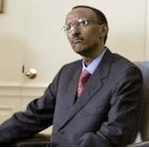
Paul Kagame on a 2006 White House Visit

Paul Kagame on a 2006 White House Visit

The Rwandan president Paul Kagame spelled out what is in store for the new group of Volunteers in his country in the Huffington Post yesterday. I don’t usually like to quote long bits from other blogs, but I can’t bring myself to cut anything out:

Peace Corps volunteers are well educated, optimistic, and keen to assist us as we continue to rebuild, but one must also recognize that we have much to offer them as well.

We will, for instance, show them our system of community justice, called Gacaca, where we integrated our need for nationwide reconciliation with our ancient tradition of clemency, and where violators are allowed to reassume their lives by Continue reading

Public Lands Service Corps Act of 2009 Passes Committee in the House

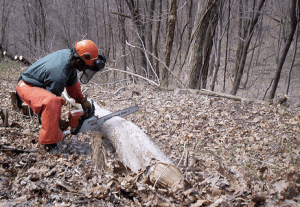
Citizens Conservation Corps of West Virginia corps member cuts a fallen tree.

Citizens Conservation Corps of West Virginia corps member cuts a fallen tree.

Today the House Natural Resources Committee passed the Public Lands Service Corps Act of 2009.

H.R. 1612, the Public Lands Service Corps Act of 2009, aims to mobilize thousands of service corps participants over the next few years to help the national parks and other public lands restore and repair lands; engage exponentially more volunteers to serve episodically in the parks; to invest in a new, more diverse generation of National Park Service leaders.

Introduced to the House of Representatives in April by U.S. Reps. Raúl M. Grijalva (D-AZ) and Nick J. Rahall (D-WV), the bill next goes to the floor of the House for a vote. (Go here to contact your Representative in favor of the bill.) No companion legislation has been introduced in the Senate yet.

Projects could include rehabilitating campgrounds, restoring historic structures, eradicating invasive Continue reading

How do you encourage disclosure and create inclusive service environments?

As your service program works to become more inclusive of members all abilities, consider what you can do to create an environment where service members with both apparent and non-apparent disabilities would be comfortable disclosing their disability and requesting reasonable accommodations if needed.

Hidden or non-apparent disabilities may include physical or mental health related conditions that are not readily visible to others. This may include, but are not limited to: specific learning disabilities, diabetes, epilepsy, low vision, hard of hearing, heart disease, and chronic illness.

    It may be difficult for some service members with disabilities to decide whether or not to disclose their Continue reading