Podcast! AVODAH: The Jewish Service Corps

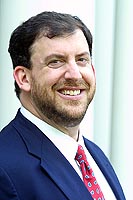
This month’s Idealist Careers Podcast features Amy Ravis Furey of AVODAH: The Jewish Service Corps.

AVODAH: The Jewish Service Corps offers young people a chance to affect social change while deepening Amy Ravis Fureytheir commitment to Jewish life by serving for a year at an anti-poverty organization in Chicago, New Orleans, New York, and Washington, DC.

As with other service corps, AVODAH’s corps members earn a basic stipend. They also live in community with other corps members, and work on group building, negotiation, and conflict resolution. In partnership with the American Jewish World Service, AVODAH’s alumni find networking, support and training.

Herself an alumna of Avodah, Amy Ravis Furey serves as New York City Program Director for AVODAH: The Jewish Service Corps. After earning her Masters in Social Work from Hunter College with a concentration in community organizing and group work, she served as an organizer for the New York City Coalition Against Hunger and as the Social Justice Coordinator at Congregation B’nai Jeshurun on the Upper West Side of Manhattan. Amy is the first Avodah alum to serve on staff as a program director at one of the AVODAH sites.

I speak with Amy Ravis Furey about the influence of AVODAH in her career path, and her mission of lifting up youth to change the world. We talk about the role of Jewish social justice teaching, the alumni nework, and the impact AVODAH has had in the world and on its corps members.

Listen to the show here!

For more information, join AVODAH staff on a conference call tonight (11/19) at 9 pm, or on December 2. The deadline to apply for the 2009-10 year is February 6th, 2009.

Choosing a Service Corps: Questions to Ask

To bring the most to your community, and to get the most out of your service experience, ask good questions before you even sign on.

Enlisting in a service corps is a great commitment: long hours, little pay, intense investment in the people you serve, and often close quarters with other corps members or colleagues.

On top of that, you have easily over a thousand program options available to you if you are a U.S. person. (I don’t have an exact number for you but I am working on that.) Domestic and international, secular and faith-based, direct service and indirect service, famous and obscure, individual placement and team-based placement—so many options! (See Corps and Coalitions in the sidebar of this blog for a partial list.)

You owe it to yourself and the corps to investigate your short list of programs thoroughly. But you also have to know yourself, your preferences, your requirements, and your goals. Be smart about your search!

Listed below are questions that I adapted from the Catholic Network of Volunteer Service, a member association of Christian service programs, which offers these lists of questions for you to ask yourself and to ask program staff when you are researching programs.

Questions to ask yourself:

WHAT IS MY MOTIVATION FOR SERVING?

You should enter a service program keeping in mind personal and professional goals, so that when you encounter challenges at site, you remember why you joined in the first place. Some responses may fall into categories such as:

  • Commitment to changing my community for the better
  • Professional development/ skill building
  • Spiritual path
  • Personal growth
  • Experience before career and grad school

WHAT EXPECTATIONS DO I HAVE?

  • Of myself
  • Of the program
  • Of my work

Really spend some time figuring out your assumptions and expectations. Do you envision yourself helping  people in your community directly? — or are you expecting an office job? Do you anticipate using some skills you’ve already got, or learning everything from scratch? Are you hoping your service program staff will be very involved with your work—observing, offering feedback—or removed from your day-to-day activities?

WHAT DO I HAVE TO OFFER?
Listing assets will help you apply for a position, craft your resume, etc. Let your list influence — at least in part — where you choose to serve. Searching for a program that takes advantage of your current abilities will help you find a good match — one that’s beneficial to your community, your service site, and you. Consider what you’re bringing to the conversation:

  • Professionally
  • Personally – talents/gifts
  • Strengths/weaknesses

HOW DO I HANDLE CHANGE AND STRESS?
You’ll encounter stresses. Are you sure you are ready for them?:

  • Moving/ leaving support system
  • New supervisor, constituents, community, job, and environment
  • Low-income lifestyle
  • Cultural adjustments

WHAT FINANCIAL NEEDS WILL I HAVE?

Consider not only groceries, rent, and entertainment. Once you know what your living allowance would be in the corps, work out a budget. Can you make ends meet? Read more on financial management for the corps member.

  • Options for forbearing or deferring student loans
  • Managing other debt you’re bringing with you to the program
  • Child care expenses
  • Transportation

Questions to ask the service program director and/or site manager before joining

Generally speaking, it’s preferable to research the program’s web site and literature thoroughly before asking any questions of program staff. To learn more about preparing for an interview, check out Chapter Nine of the Idealist.org Guide to Nonprofit Careers.

WHAT IS YOUR PROGRAM’S FOCUS?

  • Issue areas (poverty, environment, education, etc.)
  • Function (do corps members serve as grant writers, construction workers, educators, program developers, communications, etc.)
  • What other service programs are doing what yours does?/What’s the difference between your program and [another program you are considering]?

WHAT IS YOUR SUPERVISING STYLE?
It’s important for you to find a supervisor who can balance attention to you, with freedom for creativity and autonomy. Once at site, you can get what you need from your supervisors by asking for it clearly.

  • Highly directive
  • Hands off
  • Adaptive of the corps member’s needs throughout the year

WHAT TYPE OF PLACEMENT DOES YOUR PROGRAM OFFER?

You must balance what you have heard about the program, with what the program truly offers.

  • Domestic/ international
  • Rural/ urban
  • Professional skills required
  • Length of commitment
  • Direct or indirect service
  • What will I spend my day doing

WHAT CAN I EXPECT FROM YOUR APPLICATION PROCESS?

  • Paperwork involved
  • Apply to the service program headquarters, or to the host site/agency
  • Personal interview/ phone interview; how many
  • Medical and dental examinations
  • Documentation (If your program is affiliated with an academic degree program, will I apply separately to each? Do I need to take any standardized tests? Do you need to see my undergraduate transcripts?)

WHAT ELIGIBILITY REQUIREMENTS DOES YOUR PROGRAM HAVE?

  • Citizenship
  • Education level
  • Undergraduate Grade Point Average
  • Volunteer experience?

WHAT BENEFITS CAN I EXPECT FROM YOUR PROGRAM?

Sometimes the true benefits cannot be listed on a page.

  • Opportunity to serve; work for social justice
  • Training and networking opportunities
  • Career transitions support
  • Community and peer support
  • Cultural education
  • Language training (when applicable)
  • Room and board
  • Stipend or living allowance
  • Health insurance (Does it exclude coverage of pre-existing conditions and certain prescriptions? Does it cover mental health services, if I need access to that?)
  • Child care allowance
  • Student loan deferment/forbearance (Are these allowances compatible with my student loans?)
  • Scholarship or fellowship opportunities

MAY I CALL SOME OF YOUR PROGRAM’S ALUMNI?

This is helpful in getting a different perspective from someone who has completed the program.

  • What kind of support did the service program staff offer (skills training, conflict resolution, access to benefits, career transitions, etc.)
  • What did you do every day?
  • Did you feel you could see a difference in your community through your service?
  • How did you live on the stipend?

Resources

Treat your search for a service corps as you would a job search—cast your net widely, and make sure you know what you are getting yourself into. For more on nonprofit careers, see the Idealist Guide to Nonprofit Careers. Chapter Five includes a table that compares a handful of the most famous corps: service programs for early-career professionals (PDF), service programs open to mid-career professionals (PDF).

White House Office of Social Entrepreneurship?

Citing the model of City Year and the success of AmeriCorps as examples, two think tanks call for a new changeWhite House Office of Social Entrepreneurship.

The Center for American Progress Action Fund, with the New Democracy Project, will release a book in January that aims to help with President Barack Obama’s transition, “steering the government in a new, more progressive direction.”

Writing in Change For America, A Progressive Blue-Print for the 44th President, Michele Jolin explains that “The new president will take office with ambitious goals to solve our nation’s most urgent social problems, but he will be operating in a climate with limited tolerance for new government spending or government-only solutions.”

An office of social entrepreneurship in the White House — not at the Corporation for National and Community Service as has been mentioned — would establish a “policy environment that over the long term fosters new entrepreneurship, improves nonprofits’ access to growth capital, and removes outdated tax and regulatory barriers to innovation.”

Acknowledging the vital importance of the nonprofit sector — part of the private sector, and responsible for innovation and service that fall off the radar screen of government and corporations — Jolin goes onto identify specifically the social entrepreneurs of the sector who lead by example:

Within this vital and growing non-profit sector, “social entrepreneurs” — individuals who have developed system-changing solutions to solve serious social problems—are playing a unique role. Leading social entrepreneurs such as Geoffrey Canada of Harlem Children’s Zone, which provides comprehensive support to low-income children in New York’s toughest neighborhoods, and Nobel Prize–winning Muhammad Yunus of the Grameen Bank, which is the world’s most famous microlender, have developed innovative models that are reorienting the way philanthropists, the private sector, and—increasingly— policymakers address intractable problems.

Nonprofits, nimble and resourceful, can take risks and work out program models that — if successful — can be and have been successfully adpated and adopted by governments.

…the non-profit sector can be a source of innovation and experimentation, and serve as a testing ground for these new ideas. The federal government has adapted a number of successful non-profit approaches into full-scale programs. City Year’s national service successes led to AmeriCorps, for example, and a federal appropriation expanded YouthBuild into a national government program in 1993.

The cost-effective private-public partnership that is AmeriCorps has been central to the discussion of building bi-partisan support for national service.

John Podesta, Obama’s transition chief, is on leave from the Center for American Progress. To read more about the context of the recommendations, read The Chronicle of Philanthropy article.

Download the whole chapter “A New Office of Social Entrepreneurship” (PDF) from the book. See nine other chapters.

David Eisner Says Farewell

headshot_ceo_01_thumbDavid Eisner steps down as the CEO of the Corporation for National and Community Service.

(The Corporation is an independent organization established by the federal government that provides funds and accountability for AmeriCorps programs throughout the country.)

You can read his biography on the CNCS web site. And the transcript of the speech he delivered yesterday at Georgetown, “From Dropouts to Downturns — Why Service is America’s Solution.”

This letter was posted yesterday as a “thank you and farewell.”

Dear National Service Colleagues,

It feels strange to be stepping down as CEO of the Corporation at this time in the national service movement – like jumping off a train just as it is picking up speed! As I leave, I want to share just how much the work you all do has meant to me, how grateful I am to have had the privilege to represent you, and how confident I am about the future for the agency and for national service and volunteering in America.

As a result of our work together, today national service has improved more lives, grown stronger and more secure, expanded its base of bipartisan support, and built a culture of impact and accountability in a way that offers a solid foundation for continued growth. At the core of this movement are the citizens of America; individuals who are ready and willing to stand up and say “I care” when provided with the opportunity and the tools to do so. You are the leaders of this “I care” movement. As I mentioned in a speech to a group of idealistic Georgetown University students this morning, for five years I have traveled across the country with a mixture of awe and admiration at seeing how your work is saving lives, ensuring futures, defeating despair and restoring hope for Americans who have no other place to turn. Thank you for what you do and for letting me share a role in this amazing work.

Before I close, I want to share a few things about the individuals I leave behind at the Corporation for National and Community Service. The staff at the Corporation, both in headquarters in Washington, DC and across the country, are a top notch group of professionals who care more passionately about your success and the mission of national service than I could have ever believed possible before joining the Corporation myself. I am also indebted to Steve Goldsmith who chairs what may be the strongest and most effectively bipartisan board in Washington, DC, for his leadership, wisdom and support. Finally, I am grateful that Nicky Goren, my current Chief of Staff, will take over as Acting CEO with my departure. In Nicky you have an effective and experienced leader and champion for volunteering and national service.

If you would like to remain in touch with me, please feel free to contact my terrific assistant, Vickie Perry, for my personal email address. I will remain a cheerleader and champion for your work, and look forward to our paths crossing again.

Thank you,

David Eisner

Teach For India, Teach For All – Wendy Kopp’s Vision Gone Global

Modeled after the success of Teach For America, Teach For India aims to stamp out inequities in India’s schools by recruiting top college grads to teach in its poorest schools for two years.

Initiated in 2007, about 100 TFI Fellows will serve starting next fall in Mumbai and Pune and conduct classes in English. TFI Fellows will earn a competitive starting teachers salary, and receive compensation for housing banner_apply and transportation.

Struggling students will have access to some of the country’s brightest young leaders. While TFI Fellows will be trained and challenged. They will carry with them the experiences in the classroom far into their careers, whatever path they take.

As in the United States, India’s educational system has some stark statistics:

  • According to India’s 2001 Census, only 61% of the country’s population is literate. For women, the literacy rate is even lower than the national average, at 48%.
  • There are currently 7,500,000 children out of school in India.
  • Out of every 100 children in India, 15 will never attend school. Of those who attend school, 50% will drop out before Class V.

Reading through the web site of Teach For India (TFI) reminds me of reading the Teach For America (TFA) web site — similar vision, similar model, similar theory of change. To solve the problems of under-qualified teachers and outdated teaching methodology, India looked to Teach For America as a successful model. But India wasn’t the only country asking TFA for advice; apparently many other countries were. From the TFI web site:

In 2007, a new organization called Teach For All was created to support entrepreneurs in other countries who were pursuing the development of the Teach For America model locally. Teach For All was launched at the Clinton Global Initiative in September of 2007. Although a significant resource for Teach For India, Teach For All is a separately incorporated, funded, and staffed organization that is being incubated within Teach For America.

A “global network of independent social enterprises,” Teach For All-affiliated programs are operating or developing in ten nations, including the Latvia, Australia, Germany, and the United Kingdom.

map_4Note that like TFA, these other programs seem to be recruiting their own best and brightest (i.e. they are not overseas service opportunities for U.S. citizens—see Peace Corps, Jesuit Volunteers International, VSO Canada, and Atlas Service Corps —just a sampling of opportunities if you are from the United States and are eager to serve abroad).