
Peace Corps for the Over 50 Crowd

50+For people who were alive to hear President Kennedy’s call to serve in 1961, but couldn’t join Peace Corps back then — there’s still hope!

Peace Corps’s mini website for 50+ applicants offers resources and support especially for people whose main concerns about joining Peace Corps include staying in touch with the grandkids (not grandparents), and how it will affect their social security (not student loans).

The 50+ site includes a Frequently Asked Questions section with topics like health and financial matters. It also includes stories (including audio) of senior Volunteers.

Warning: if you are sentimental about service, the slideshows and voice overs might inspire tears.

While the average Peace Corps Volunteer is 27, the program has no upper age limit. In my mid-20s, I served as a Peace Corps Volunteer in China alongside mid-career, retired, and even elderly U.S. citizens. Chinese students and faculty enjoyed inviting Continue reading

More Peace Corps Legislation Could Enable More to Serve Abroad

As the Serve America Act becomes law, it offers no support of Peace Corps. Legislation to increase the capacity of Peace Corps was introduced in the House of Representatives earlier this year.

A fish farming family

A fish farming family

In mid-February, Rep. Sam Farr (D-CA) introduced H.R. 1066, the Peace Corps Expansion Act of 2009. The legislation calls for gradually increased funding for Peace Corps (up to $750 million in 2012), enabling more Volunteers to serve, and increasing the amount of the readjustment allowance Volunteers receive at the end of their service term.

13,011 Americans applied in 2008 to volunteer their service in the Peace Corps, a 16 percent increase over the 11,246 applications received in 2007. While applications to Peace Corps and other service corps are seeing record numbers, Peace Corps has funding for 400 fewer Volunteers this year (compared with 2008), and is reportedly offering one-year deferrals to candidates.

(In 1966, according to the Boston Globe, 15,000 Peace Corps Volunteers served in the field.)

According to the Boston Globe article about Peace Corps from this past weekend, former Peace Corps Country Director Mark Gearan said, “We spend more on the military marching bands. …This is 1 percent of 1 percent [of the federal budget]. There’s Continue reading

The Return of Peace Corps Rwanda

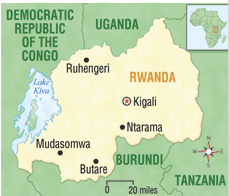
Map of Rwanda32 Peace Corps Volunteers will be sworn-in today in Kigali, marking the return of the Peace Corps Rwanda program after a 15-year absence.

According to the Peace Corps, its presence in Rwanda ended 15 years ago when “the the civil unrest that resulted in the genocide” began. (Read more about the 1994 genocide in Rwanda.)

The new group of Volunteers, who have been in pre-service training in Rwanda since January, will work on health and community development assignments, including collaborating with the Rwandan government and its U.S. government partners  to combat the HIV/AIDS pandemic.

Like the United States, every Peace Corps host country has its unique history and psychological scars from past Continue reading

Career Tip: Timing Your Job Search and Supporting Yourself During the Transition

April To-DoIf you aim to move onto a salaried job after your service term ends, you may be facing some big logistical challenges — when do you start actively looking for your next job? If you don’t have something lined up when your term ends, how do you support yourself till you land that job?

When to Start Your Active Job Search

Regardless of your service corps, your term probably has a definite end date.  If that is the case, lining up a job can pose tricky questions, such as when do you start applying for jobs? And when, during the application process, do you let the hiring team know your availability limitations?

When to start your active job search—sending in applications—is a little fuzzy. The typical job search takes about six Continue reading

Your Service Networks Really Can Help with Your Career Transition

A story about how networking during Peace Corps reaped rewards after my service term ended.

I’d been back in Atlanta for six months, living off of my $5,075 Peace Corps readjustment allowance—at my parent’s house, of course—and also the pocket change I made working at an amphitheatre during the 1996 Olympics, and a very unpleasant week as a temp (who knew you needed office skills to work in an office?), before I scored my first job interview. It was for a Program Assistant position at an education non-profit in Atlanta.

I had never worked for a non-profit before and I would never have looked in that direction had it not been for connections I’d made while in Guinea.

I’d met Charles soon after arriving in Guinea two years earlier. He worked for USAID and lived in Conakry, Guinea’s capital city. A former Peace Corps Volunteer (PCV), he understood the travails of volunteer life, so he let PCVs house sit whenever his work took him elsewhere.

For two years, I’d lived in a small village roughly seven hours north of Conakry. Although my house was only 15 kilometers off the main road, it took an hour — via bush taxi or on my Trek mountain bike (that road was so bad, the mode of transportation Continue reading