Service Opp: Faiths Act Fellows Combat Malaria

A cohort of 30 young people, representing many faiths, raise awareness and resources to fight deaths caused by malaria.
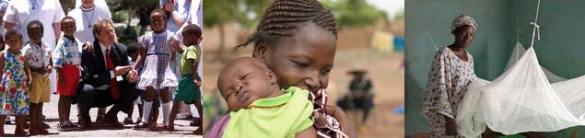
malaria

Recognizing that religious pluralism can either be a source of conflict or cause for cooperation, many groups around the world strive to bring young people of diverse faiths together—to act on the values their faiths hold in common. Serving together deepens the faith commitment of each person, while also enabling each to see another perspective.

A project launched by the Tony Blair Faith Foundation, and coordinated by Malaria No More and the Interfaith Youth Core, the Faiths Act Fellows work towards achieving the United Nation’s Millenium Development Goals regarding malaria. From the Tony Blair Faith Foundation website:

The disease kills over a million vulnerable people every year, mainly young children and women in Africa. It costs Africa over $12 billion a year in health costs and lost productivity, making poor countries even poorer. Worldwide, there are more than 350 million malaria infections each year. More than 1 million of these cases end in death; others scar their victims for life with permanent brain damage.

Fellows come from the United States, the United Kingdom, and Canada. They train for two months in London, Chicago, and with primary health care partners in Africa — and then return to their home countries for 8 months of full-time, stipended service.

Fellows serve in faith-based organizations that also work on malaria-related issues. From the website:

Fellows will accomplish this primarily by doing outreach presentations and workshops for young people and their allies in local faith communities, including congregations, faith-based schools and religious or inter-religious student groups at local universities. Following their initial presentations and workshops, the Fellows will provide counsel and additional training to each active group as they enact their ideas, helping to ensure collective success in inter-religious partnerships and in raising awareness and life-saving funds.

The application is due January 15.

acts_of_faith

If you are interested in helping out but can’t apply to become a fellow, here are some other ways to get involved with the Faiths Act Campaign. Also check out the interfaith social network Bridge Builders on Ning, operated by the Interfaith Youth Core.

To learn more about the interfaith youth movement, check out the work of the Interfaith Youth Core based in Chicago, and read its founder Eboo Patel’s memoir Acts of Faith: The Story of an American Muslim, the Struggle for the Soul of a Generation.

* Photo above taken from the Tony Blair Faith Foundation, and copyright Lucas Foglia.

Sinking Economy? Need More National Service

Harris WoffordDesperate economic times highlight the need for cost-effective, public-private measures to serve the needy in the United States.

Today national service champions Harris Wofford and Stephen Goldsmith outline the need for more national service, as a response to the economic downturn.

Excerpts below…

Food banks’ supplies are set to reach new lows. Yet this year we will see millions of citizens reach out in record numbers to assist those in need — offering food, special care and compassion.

As the government seeks to deal with the economic crisis and relieve the distress felt by millions of families, we should not overlook the great American tradition of service. More than 60 million citizens every year are providing service to their neighbors and their communities.

President-elect Barack Obama has vowed to make service a central cause of his presidency. In his call to service outlining plans for a large expansion of citizen service, he said he would reach out to Republicans, Democrats and independents alike, young and old, and ask all of us for our service and active citizenship. ”We need your service, right now,” he said.

Here are a few examples of what ”We the People” can do right now and in the year ahead:

  • We can help children in danger of dropping out of school by volunteering as tutors and mentors.
  • Skilled professionals (lawyers, accountants, et al.) can go door to door in distressed communities to assist families facing mortgage foreclosure.
  • Volunteers can support displaced families and children by helping them transition from homeless shelters to more permanent housing.
  • Since financial stress and unemployment can lead to substance abuse, psychological despair and homelessness, community assistance centers and shelters will need many new volunteers and basic supplies.

However any such new government resources should be viewed not as a jobs program but as assets and agents necessary to manage and train millions of volunteers. These new forces can be rapidly assigned to existing nonprofits to recruit and organize unpaid, shorter-term volunteers.

Last year 75,000 AmeriCorps members recruited more than 1.7 million local volunteers. One of the best examples of this is AmeriCorps’ relationship with Habitat for Humanity, where members don’t just build homes, but most of all recruit, train and manage the community volunteers on whom Habitat relies. AmeriCorps members serving with Habitat for Humanity helped mobilize 200,000 community volunteers to build 1,700 homes.

Show Your Corps Member Love this Holiday Season

Rejecting the traditional gift list, I wanted to highlight some things you can give or do over the holidays for the corps member in your life — whether they serve in your office, are in your family, or a good friend. Check out the Give List for more ideas.

1. Ask them/listen to what they say. This year it’s okay not to surprise the corps member in your life. They may actually need help with a chore or an expense and would appreciate that more than any surprise you can dream up.

2. Cash. Economists say it’s the best gift anyway, at least in terms of efficiency. Your corps member can spend it as they see fit. If it feels un-gift-like, offer it in a decorative envelope with a heart-warming letter inside telling them how much they or their service means to you. If your corps member is an international volunteer, deposit the check in their State-side bank account rather than send through the mail.

3. Food/gift cards for food. While a $25 gift card to the local boutique grocer may sound appealing to you, the gift goes further at a store like Trader Joe’s which has low prices. If your corps member is an international volunteer, find out what essential, shippable items they can’t get in their host country and send a well-sealed care package. You’d be surprised how valuable a box of corn flakes or mac & cheese is to them.

4. Subscriptions. The gifts that keep on giving. You can find subscription services for a wide range of things — like magazines, obviously; wine from a local vineyard; and even fair-trade coffee.

5. Socially responsible gifts, donations, or loans in their name. This year your corps member may be especially sensitive to the local impact and cost of goods and services, and to extravagance and waste.

If you want to offer them a material gift, consider buying something that positively impacts the community or region. For example, Echoing Green funds social enterprises and offers this gift guide.

You can also donate to a nonprofit project that means something to them, either their own project (check out this site, for donating to Peace Corps Volunteer projects); nonprofits set up for gift-giving like Heifer International; their local public radio station; or any organization with a mission your corps member believes in. Other nonprofits like HealthCorps offer branded gifts through CafePress.

Another option is lending for a good cause, in their name. For example, Kiva.org allows people to lend money online, in amounts as small as $25, to micro-enterprises around the world — you browse and choose the business you’d like to help start up. When you lend, you aren’t even giving — you’ll be repaid, and can pocket the money or lend again.

6. A party or potluck in their honor. If your corps member is home for the holidays, consider hosting a welcome-back gathering for them and their friends.

7. A visit from you. If your corps member is far from home, consider visiting them. If you can’t visit them over the holidays, announce your plan to visit another time as part of their gift.

8. Tickets to a special experience. The ballet, an athletic event, a concert. Not only will the experience be something they may not afford on their own, it’s also not something material they have to worry about transporting when they move on after their term ends.

9. Meaningful tech tools. A digital and/or video camera to record their year, a video camera add-on for their computer so you can stay in touch through Skype, a MacBook that has it all.

10. Something homemade. Anything from a scarf to a personalized cookbook to a scrapbook of their accomplishments. If you go this route, make the decision based on your own talents as well as their tastes. As with socially responsible gifts, homemade gifts aren’t necessarily cheaper, and they are more time-intensive. But they are keepsakes forever, and will always remind your corps member of this holiday season, when they served in a corps.
add to del.icio.us :: Add to Blinkslist :: add to furl :: Digg it :: add to ma.gnolia :: Stumble It! :: add to simpy :: seed the vine :: :: :: TailRank :: post to facebook

NonProfit Times honors Service Nation Leaders

Nonprofit periodical spotlights national service by honoring leaders of the Service Nation movement.

Today The NonProfit Times announced the 2008 NonProfit Times Executives of the Year:

For their dedication toward promoting a national service agenda, John Bridgeland, president and CEO of Civic Enterprises, Michael Brown, co-founder and CEO of City Year, Vartan Gregorian, president of the Carnegie Corporation of New York, Alan Khazei, founder and CEO of Be the Change, Michelle Nunn, president and CEO of the Points of Light Institute, and Richard Stengel, managing editor of Time magazine, have been selected the 2008 NonProfit Times Executives of the Year.

John Bridgeland speaks at the Service Nation Summit

John Bridgeland speaks at the Service Nation Summit