Corps Finances: The Problems of Unbanked and Underbanked

Barriers to banking are highlighted in results of an FDIC survey published earlier this year, with implications for corpsMixed Cash by Stopnlook, Flickr Creative Commons members and the communities they serve.

An important gateway to building financial assets is having a checking and savings account at a bank or credit union. People without an account at a mainstream financial institution are less likely to own a home or other significant assets, and more likely to pay higher transaction fees for cashing their paychecks, taking out small loans, and remitting money to family members in other countries. Also without an account to deposit money in, cash can be more easily stolen, lost (as in a house fire), and spent.

Meet the unbanked and underbanked members of the community. According to the FDIC, “unbanked” refers to people Continue reading

Engaging Service Members of All Ages and Abilities in Service

Living today for a better tomorrow

May has been declared Older Americans Month, by the Administration on Aging (AoA) out of the U.S. Department of Health and Human Services.

According to the AoA: “This year’s theme ‘Living Today for a Better Tomorrow’ reflects AoA’s continued focus on prevention efforts and programs throughout the country that are helping older adults have better health as they age.” Many seniors of all abilities are “living today for a better tomorrow” by committing themselves to national and community service through Senior Corps, AmeriCorps, and Learn & Serve programs.

In May 2007, the Corporation for National and Community Service released “The Health Benefits of Volunteering: A Review of Recent Research” (PDF). The study “documents major findings from more than 30 rigorous and longitudinal studies that reviewed the relationship between health and volunteering. The study, which were controlled for other factors, found that volunteering leads to improved physical and mental health.”

Key findings include:

  • Older adults are more likely to receive greater health benefits from volunteering; including improved physical and Continue reading

Emergency Preparedness and People with Disabilities

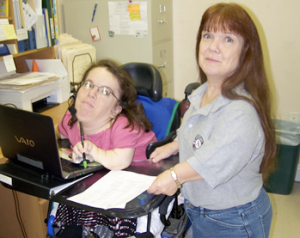
Photo of Bobbie Singletary at work, helping someone on the computer.Many AmeriCorps, Senior Corps and Learn and Serve America programs focus on emergency preparedness. Service members who serve in these programs inform and educate the public about the need for emergency preparedness, including emergency preparedness for individuals with disabilities, and respond when emergencies happen.

Bobbie Singletary is an AmeriCorps  VISTA who has been serving at Life of South Mississippi from 2006, focusing specifically on emergency preparedness for people with disabilities.

Bobbie, who is of short stature, was volunteering at Life of South Mississippi when she was asked to become their VISTA. “Life [of South Mississippi] helped my family, so I wanted to give of my time.”

In her service, she focuses on providing disaster preparedness trainings to the public and especially to persons with disabilities. She gets the word out to first responders and other emergency managers so that they are best able to assist everyone regardless Continue reading

Access to Outdoor Service and the Utah Conservation Corps

Today is Earth Day and Keep America Beautiful‘s “Great American Clean Up” takes place every year from March 1 Great American Cleanupthrough May 31, with partners like Service Nation and Volunteer Match.

“In 2008, an estimated 3 million volunteers and attendees donated more than 6.7 million hours in clean, beautify and improve more than 17,000 communities during more than 30,000 events in all 50 states and beyond.”

National service programs are working to engage members and volunteers of all abilities in service opportunities outdoors. For example, for the past three summers, the Utah Conservation Corps (UCC) Access to Service Inclusive Crew has conducted accessibility surveys and transition plans for the Wasatch-Cache National Forest and worked to design and construct an Continue reading

Peace Corps for the Over 50 Crowd

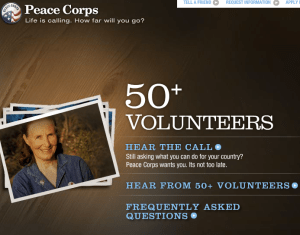
50+For people who were alive to hear President Kennedy’s call to serve in 1961, but couldn’t join Peace Corps back then — there’s still hope!

Peace Corps’s mini website for 50+ applicants offers resources and support especially for people whose main concerns about joining Peace Corps include staying in touch with the grandkids (not grandparents), and how it will affect their social security (not student loans).

The 50+ site includes a Frequently Asked Questions section with topics like health and financial matters. It also includes stories (including audio) of senior Volunteers.

Warning: if you are sentimental about service, the slideshows and voice overs might inspire tears.

While the average Peace Corps Volunteer is 27, the program has no upper age limit. In my mid-20s, I served as a Peace Corps Volunteer in China alongside mid-career, retired, and even elderly U.S. citizens. Chinese students and faculty enjoyed inviting Continue reading