Service Opp: Faiths Act Fellows Combat Malaria

A cohort of 30 young people, representing many faiths, raise awareness and resources to fight deaths caused by malaria.

malaria

Recognizing that religious pluralism can either be a source of conflict or cause for cooperation, many groups around the world strive to bring young people of diverse faiths together—to act on the values their faiths hold in common. Serving together deepens the faith commitment of each person, while also enabling each to see another perspective.

A project launched by the Tony Blair Faith Foundation, and coordinated by Malaria No More and the Interfaith Youth Core, the Faiths Act Fellows work towards achieving the United Nation’s Millenium Development Goals regarding malaria. From the Tony Blair Faith Foundation website:

The disease kills over a million vulnerable people every year, mainly young children and women in Africa. It costs Africa over $12 billion a year in health costs and lost productivity, making poor countries even poorer. Worldwide, there are more than 350 million malaria infections each year. More than 1 million of these cases end in death; others scar their victims for life with permanent brain damage.

Fellows come from the United States, the United Kingdom, and Canada. They train for two months in London, Chicago, and with primary health care partners in Africa — and then return to their home countries for 8 months of full-time, stipended service.

Fellows serve in faith-based organizations that also work on malaria-related issues. From the website:

Fellows will accomplish this primarily by doing outreach presentations and workshops for young people and their allies in local faith communities, including congregations, faith-based schools and religious or inter-religious student groups at local universities. Following their initial presentations and workshops, the Fellows will provide counsel and additional training to each active group as they enact their ideas, helping to ensure collective success in inter-religious partnerships and in raising awareness and life-saving funds.

The application is due January 15.

acts_of_faith

If you are interested in helping out but can’t apply to become a fellow, here are some other ways to get involved with the Faiths Act Campaign. Also check out the interfaith social network Bridge Builders on Ning, operated by the Interfaith Youth Core.

To learn more about the interfaith youth movement, check out the work of the Interfaith Youth Core based in Chicago, and read its founder Eboo Patel’s memoir Acts of Faith: The Story of an American Muslim, the Struggle for the Soul of a Generation.

* Photo above taken from the Tony Blair Faith Foundation, and copyright Lucas Foglia.

AmeriCorps Project Co-Founder Named CNN Hero of the Year

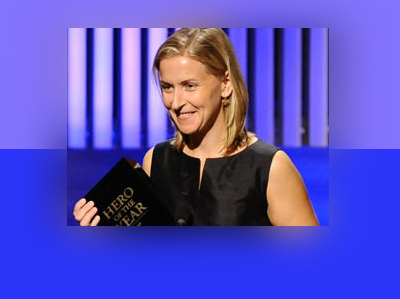
Thanksgiving night, Anderson Cooper will name Liz McCartney, co-founder of the St. Bernard Project in New Orleans, CNN’s Hero of the Year. The Project credits the involvement of AmeriCorps members with its success.

The following is copied directly from the press release issued by the Corporation for National and Community Service that funds and governs AmeriCorps programs:

Ms. Beatrice and a relative

Ms. Beatrice and a relative

Washington DC — Liz McCartney, cofounder of a Louisiana nonprofit that engages volunteers and AmeriCorps members to rebuild homes destroyed by Hurricane Katrina, was named the 2008 CNN Hero of the Year at a ceremony Saturday night in Hollywood.

McCartney received $100,000 to continue the project’s work in rebuilding homes in St. Bernard Parish. McCartney had already received $25,000 for being one of 10 finalists.

The “CNN Heroes: An All-Star Tribute” ceremony, hosted by AC 360 host Anderson Cooper and featuring musical performances by Christina Aguilera, Alicia Keys, and John Legend, will be broadcast on CNN at 9 p.m. EST on Thanksgiving.

“To the country and the world, I ask you to please join us,” said McCartney in her acceptance speech. “Together we can continue to rebuild families’ homes and lives. If you join us, we’ll be unstoppable.”

The top ten finalists were selected from more than 3,700 nominations by a panel that included Magic Johnson, Kristi Yamaguchi, Deepak Chopra, and Desmond Tutu. McCartney was chosen as CNN Hero of the Year after six weeks of online voting in which more than 1 million votes were cast.

Liz McCartney, CNN Hero of the Year 2008

Liz McCartney, CNN Hero of the Year 2008

McCartney formed the St. Bernard Project two years ago with her boyfriend Zack Rosenburg after the couple came to the New Orleans area to volunteer in the wake of Katrina.  Shocked by the widespread destruction, they quit their professional jobs in Washington D.C. and moved to Louisiana.

The project has mobilized more than 9,000 volunteers to renovate and reconstruct 151 homes for residents of St. Bernard Parish.  It has relied heavily on the intensive service of AmeriCorps members to do construction work and manage volunteers. In the past two years, 260 AmeriCorps members have provided more than 80,000 hours of service, trained and managed more than 8,000 volunteers; supervised and worked side-by-side with volunteers to rebuild 120 families’ homes; provided more than $1 million worth of in kind volunteer supervision and labor; and helped raise more than $2 million in funds.

“We would not be where we are today without our partnership with AmeriCorps. This award is a tribute to all of our efforts,” McCartney said yesterday.  “Our relationship with AmeriCorps has been a very powerful and effective force for the community.”

The project works with families to do reconstruction work that’s needed to allow them to move back in. This varies from house to house but typically includes mold remediation, rewiring, plumbing, insulation, sheetrock, cabinetry, installing appliances and cabinets, and other tasks. It takes an average of 12 weeks and $12,000 to rebuild a home.

“I am surrounded by the people who are the real heroes, the people of St. Bernard who have put up with so many challenges and are still fighting for their community. The problems are big but the solutions are readily available. This award is great for the community because it will put St. Bernard and the New Orleans area in the national spotlight and show that we are making progress but still need volunteers,” McCartney said.

At the CNN Heroes ceremony, the top 10 finalists were introduced by celebrity presenters including actors Cameron Diaz, Salma Hayek, John Krasinski, Forest Whitaker, Meg Ryan, Terrence Howard, Lucy Liu, Jessica Biel, Kate Beckinsale and Selena Gomez.  The CNN Heroes campaign salutes everyday people accomplishing extraordinary things in their communities and beyond.  For more information about CNN Heroes, visit http://www.cnn.com/SPECIALS/2008/cnn.heroes/

The Corporation for National and Community Service is a federal agency that improves lives, strengthens communities, and fosters civic engagement through service and volunteering. Each year, the Corporation engages four million Americans of all ages and backgrounds in service through its Senior Corps, AmeriCorps, and Learn and Serve America programs. For more information, visit  www.NationalService.gov.

See the original The New Service post about Liz McCartney as a Top Ten Hero from Oct. 24.

Change.org: How Would You Change the U.S.?

The social networking site Change.org (not to be confused with Obama’s transition site Change.gov) asks you to submit and vote for the best ideas to change the United States.

Here are some of the top national and public service ideas afloat.

uspsalogoVote for the U.S. Public Service Academy, a four-year, federally subsidized, civilian counterpart to Westpoint and the other military academies. Students would attend cost-free in exchange for a commitment to a few years of public service post-graduation. Spearheaded by Echoing Green Fellow Chris Myers Asch, and backed already by many government leaders. (Listen to the Idealist.org podcast on the idea.)

Vote for a national service program to improve local infratructure. “A large yet light and fast corps of workers – not unlike President-elect Obama’s campaign infrastructure – mobilized to solve such regional blights could have a huge impact on our economy, our environment, our education, and our civic engagement and empowerment, all from the ground up.” Submitted by librarian and media ecologist Terence Fitzgerald.

Abigail Falik

Abigail Falik, Founder of Global Citizen Year

Vote for Global Citizen Year, “The world urgently needs globally engaged American leadership.  Poverty, disease and climate change affect us all, threatening global security, prosperity and survival.  Yet Americans remain dangerously uninformed and unengaged in global issues….By recruiting and training a diverse corps of emerging leaders, and supporting them as apprentices with development organizations across Asia, Africa and Latin America, we’ll ensure that many more students have the global fluencies and civic savvy they need to approach their lives with passion, perspective and purpose. ” Global Citizen Year is already incorporated as an organization, headed by Abigail Falik, with plans to launch its first corps during the fall of 2009.

Atlas Corps logoVote for a two-way international service corps. “For 47 years Americans have had the opportunity to volunteer abroad with the Peace Corps and other programs, however it is almost impossible for someone overseas to volunteer in the U.S. The U.S. Government should support a global, two-way, service corps, such as Atlas Corps, where nonprofit leaders from abroad can volunteer in the U.S. and U.S. nonprofit leaders can volunteer abroad.” Submitted by Scott Beale, the founder of Atlas Corps.

Vote for incorporating social entrepreneurship into the national service plan. “While many students will be thrilled with the loan-repayment and service opportunities provided, and will rush at the ability to as teachers in under-privelleged schools or as Peace Corps volunteers abroad, the social entrepreneurs among the undergraduate crowd need support for their style of making change as well. This group are the synthesizers that see gaps in current nonprofit service provision and create new, innovative approaches to change. Unfortunately, there is almost no regularized funding available for student social entrepreneurs to translate their student work into full time careers and full-scale nonprofits. Social venture funding is needed.” Submitted by Nathaniel Whittemore, a Chicago-based social entrepreneur.

Vote to Expand AmeriCorps. “The benefits of giving Americans a chance to serve their country radically outweigh the costs.  In addition, service is a wonderful way to give young people the resources they need to go to college.  President Obama should keep his promise to expand AmeriCorps to 250,000 members a year by immediately pushing to increase its funding, instituting a “health corps” and a “green corps,” and giving a major speech in which he personally solicits young people to make a commitment to filling these slots.  More than ever, Americans desire the opportunity to serve their country; President Obama must make that a priority immediately.” Submitted by UPenn law student, activist, and AmeriCorps Alum Adam Schwartzbaum.

The top ten ideas overall, submitted in a wide range of categories, will be presented to President-Elect Obama on inauguration day (January 20).

Voting will take place in two rounds — round one ends on December 31. The top ideas from each category will make it to round two. Read more about the Ideas for Change in America.

AmeriCorps*NCCC Members Earn Certification through American Humanics

AmeriCorps’s conservation corps partners with American Humanics to offer corps members certification in nonprofit competency.

Also note that AmeriCorps*NCCC has new deadlines: April 1 (summer class) and July 1 (winter class).

Recognizing that a term of service is a valuable education, American Humanics (AH) offers ncccAmeriCorps*NCCC corps members the opportunity to count service hours towards AH nonprofit certification.

A national organization that offers educational opportunities on nonprofit management topics to undergraduates throughout the United States, AH has been “preparing tomorrow’s nonprofit leaders” since 1948. Around 3,000 students across the country are engaged in AH programs at 70 colleges and universities. Many of these students are working towards AH certification.

(Note that neither AH nor any other nonprofit management certification is required to get a program-management job in the nonprofit sector. Some public service roles do require certification. Read more about professional certification — and how to assess the value employers place on it — on Idealist.org’s Public Service Graduate Education Resource Center.)

The requirements of typical AH certification include 300 hours of approved internship service, general engagement in nonprofit leadership activities, academic coursework, a Bachelor’s degree, and completion of one AH Management Institute (the organization’s annual conference). What this means for NCCC corps members and alumni:

  • AmeriCorps*NCCC members serve for 1700 hours which more than achieves the internship and nonprofit leadership objectives of certification.
  • NCCC’s extensive training throughout the 10-month term of service counts for most of the academic course work requirements.
  • NCCC alumni must attend one AH Management Institute to complete some of the course requirements.
  • For the remaining course requirements, NCCC alumni can take courses at AH partner schools. Louisiana State University’s Shreveport campus allows NCCC members and recent alumni to take the needed courses  online—paying in-state tuition. (The Eli Segal AmeriCorps Education Award can apply to the costs of these courses.) LSU Shreveport also waives the GRE requirement for NCCC alumni taking these courses.
  • If NCCC corps members haven’t finished their Bachelor’s degree yet, AH gives them seven years to complete it in order to be eligible for certification.

AmeriCorps*NCCC is the branch of AmeriCorps that is a conservation corps, modeled after the New Deal-era Civilian Conservation Corps. NCCC stands for National Civilian Conservation Corps and is pronounced “N-triple-C.” The program is team-based and residential, for people aged 18-24. Teams travel to a variety of work sites throughout the 10-month term of service, exposing the young people to a variety of new service experiences. NCCC has been instrumental in rebuilding New Orleans and Mississippi in the wake of Hurrican Katrina in 2005. Each team is based out of one of the following campuses: Denver, CO; Sacramento, CA; Perry Point, MD; and Vinton, IA

AmeriCorps*NCCC is accepting applications through April 1, 2009, for its summer-start class, and July 1, 2009, for its winter-start class.

Learn more by listening to the Idealist.org podcast with Katrina Mathis on AmeriCorps*NCCC.

AH also has its own AmeriCorps program called AmeriCorps*ProCorps. ProCorps members serve from 450-1700 hours and earn the Eli Segal AmeriCorps Education Award (up To $4,725 for the full 1700-hour term).

Choosing a Service Corps: Questions to Ask

To bring the most to your community, and to get the most out of your service experience, ask good questions before you even sign on.

Enlisting in a service corps is a great commitment: long hours, little pay, intense investment in the people you serve, and often close quarters with other corps members or colleagues.

On top of that, you have easily over a thousand program options available to you if you are a U.S. person. (I don’t have an exact number for you but I am working on that.) Domestic and international, secular and faith-based, direct service and indirect service, famous and obscure, individual placement and team-based placement—so many options! (See Corps and Coalitions in the sidebar of this blog for a partial list.)

You owe it to yourself and the corps to investigate your short list of programs thoroughly. But you also have to know yourself, your preferences, your requirements, and your goals. Be smart about your search!

Listed below are questions that I adapted from the Catholic Network of Volunteer Service, a member association of Christian service programs, which offers these lists of questions for you to ask yourself and to ask program staff when you are researching programs.

Questions to ask yourself:

WHAT IS MY MOTIVATION FOR SERVING?

You should enter a service program keeping in mind personal and professional goals, so that when you encounter challenges at site, you remember why you joined in the first place. Some responses may fall into categories such as:

  • Commitment to changing my community for the better
  • Professional development/ skill building
  • Spiritual path
  • Personal growth
  • Experience before career and grad school

WHAT EXPECTATIONS DO I HAVE?

  • Of myself
  • Of the program
  • Of my work

Really spend some time figuring out your assumptions and expectations. Do you envision yourself helping  people in your community directly? — or are you expecting an office job? Do you anticipate using some skills you’ve already got, or learning everything from scratch? Are you hoping your service program staff will be very involved with your work—observing, offering feedback—or removed from your day-to-day activities?

WHAT DO I HAVE TO OFFER?
Listing assets will help you apply for a position, craft your resume, etc. Let your list influence — at least in part — where you choose to serve. Searching for a program that takes advantage of your current abilities will help you find a good match — one that’s beneficial to your community, your service site, and you. Consider what you’re bringing to the conversation:

  • Professionally
  • Personally – talents/gifts
  • Strengths/weaknesses

HOW DO I HANDLE CHANGE AND STRESS?
You’ll encounter stresses. Are you sure you are ready for them?:

  • Moving/ leaving support system
  • New supervisor, constituents, community, job, and environment
  • Low-income lifestyle
  • Cultural adjustments

WHAT FINANCIAL NEEDS WILL I HAVE?

Consider not only groceries, rent, and entertainment. Once you know what your living allowance would be in the corps, work out a budget. Can you make ends meet? Read more on financial management for the corps member.

  • Options for forbearing or deferring student loans
  • Managing other debt you’re bringing with you to the program
  • Child care expenses
  • Transportation

Questions to ask the service program director and/or site manager before joining

Generally speaking, it’s preferable to research the program’s web site and literature thoroughly before asking any questions of program staff. To learn more about preparing for an interview, check out Chapter Nine of the Idealist.org Guide to Nonprofit Careers.

WHAT IS YOUR PROGRAM’S FOCUS?

  • Issue areas (poverty, environment, education, etc.)
  • Function (do corps members serve as grant writers, construction workers, educators, program developers, communications, etc.)
  • What other service programs are doing what yours does?/What’s the difference between your program and [another program you are considering]?

WHAT IS YOUR SUPERVISING STYLE?
It’s important for you to find a supervisor who can balance attention to you, with freedom for creativity and autonomy. Once at site, you can get what you need from your supervisors by asking for it clearly.

  • Highly directive
  • Hands off
  • Adaptive of the corps member’s needs throughout the year

WHAT TYPE OF PLACEMENT DOES YOUR PROGRAM OFFER?

You must balance what you have heard about the program, with what the program truly offers.

  • Domestic/ international
  • Rural/ urban
  • Professional skills required
  • Length of commitment
  • Direct or indirect service
  • What will I spend my day doing

WHAT CAN I EXPECT FROM YOUR APPLICATION PROCESS?

  • Paperwork involved
  • Apply to the service program headquarters, or to the host site/agency
  • Personal interview/ phone interview; how many
  • Medical and dental examinations
  • Documentation (If your program is affiliated with an academic degree program, will I apply separately to each? Do I need to take any standardized tests? Do you need to see my undergraduate transcripts?)

WHAT ELIGIBILITY REQUIREMENTS DOES YOUR PROGRAM HAVE?

  • Citizenship
  • Education level
  • Undergraduate Grade Point Average
  • Volunteer experience?

WHAT BENEFITS CAN I EXPECT FROM YOUR PROGRAM?

Sometimes the true benefits cannot be listed on a page.

  • Opportunity to serve; work for social justice
  • Training and networking opportunities
  • Career transitions support
  • Community and peer support
  • Cultural education
  • Language training (when applicable)
  • Room and board
  • Stipend or living allowance
  • Health insurance (Does it exclude coverage of pre-existing conditions and certain prescriptions? Does it cover mental health services, if I need access to that?)
  • Child care allowance
  • Student loan deferment/forbearance (Are these allowances compatible with my student loans?)
  • Scholarship or fellowship opportunities

MAY I CALL SOME OF YOUR PROGRAM’S ALUMNI?

This is helpful in getting a different perspective from someone who has completed the program.

  • What kind of support did the service program staff offer (skills training, conflict resolution, access to benefits, career transitions, etc.)
  • What did you do every day?
  • Did you feel you could see a difference in your community through your service?
  • How did you live on the stipend?

Resources

Treat your search for a service corps as you would a job search—cast your net widely, and make sure you know what you are getting yourself into. For more on nonprofit careers, see the Idealist Guide to Nonprofit Careers. Chapter Five includes a table that compares a handful of the most famous corps: service programs for early-career professionals (PDF), service programs open to mid-career professionals (PDF).