Obamas, Public Allies in the Spotlight

Service program receives more, positive, media attention while solving tough social problems for communities and offering professional growth for corps members.

logo

Public Allies has received a lot of tough press among obscure blogs this year, but with established connections to the future President and First-Lady, the outlook in the media has just gotten brighter for the national, Milwaukee-based AmeriCorps program.

Here are just a couple news items involving Public Allies in the past week since the election:

The National Public Radio show Morning Edition mentioned Public Allies this morning in a discussion of Michelle Obama’s executive experience since graduating from law school. She was the founding Executive Director of Public Allies Chicago.

The San Francisco Chronicle published this article about social entrepreneurs’s hopes for the new administration. The New York Post ran an article on Michelle Obama.

Michelle Obama chatted last week with a Newsweek journalist about her experience with Public Allies and the future of national service generally:

[Richard Wolffe:] You want to continue what you did with Public Allies (which trains young people to become leaders of community groups and nonprofits) as First Lady. What’s your thinking on how to go about that?

images[Michelle Obama:] Barack is talking about a deeper investment in national service; that’s been part of his platform. He’s been meeting with some of the leadership of the AmeriCorps national-service movements—the Public Allies, the Teach for Americas, the City Years of the World—and figuring out how do we use that model, expand upon it, and help use that as a more creative way to defray the costs of college for young people and get all Americans really engaged. What AmeriCorps showed me, during the time that I worked on it, is that all these resources of young people, and not-so-young people, as I call them—because AmeriCorps is not just for young adults but people of all ages—you can fill a lot of gaps with the help of community-service hours. The young people in my program worked as program directors. They worked with kids and they worked in parks and they worked with nonprofit organizations that didn’t have the resources to bring people in full time. So this is one of those clear win-wins. You can help kids pay for school, you can get needed man-hours into really critical things like the environment, senior care, Head Start—a whole range of things. And you get the country more focused on giving back.

Earlier this year, Fast Company named Public Allies and its President and CEO Paul Schmitz one of the top 45 Social Entrepreneurs Who Are Changing the World.

11/12/08 an article about Public Allies appeared in the Pittsburgh Post-Gazette.

11/13/08 in Canada’s National Post.

What is Public Allies?

Public Allies is a 10-month service and leadership program that serves in 15 cities across the United States.  Corps members — called “Allies” — serve with nonprofits and universities to “create, improve and expand services that address diverse issues, including youth development, education, public health, economic development and the environment.”

The monthly stipend (at $1300-$1800) is higher than many AmeriCorps programs, and Allies are eligible for the $4725 AmeriCorps education award at the end of the term. But the best benefit of the program may be its extraordinary training opportunities. This, from the Public Allies web site:

A rigorous leadership development curriculum delivered by community leaders, practitioners and educators, which includes:

  • Intensive weekly skill training and leadership development seminars
  • Critical feedback, reflection, and personal coaching toward individual performance and professional goals
  • Community building and team projects with a diverse cohort of peers
  • Presentations of learning at the end of the year to demonstrate how one met the learning outcomes of the program

Good news for Public Allies and for national service

Not only Public Allies stands to benefit from the media attention, but national service as a whole does as well, including efforts like Service Nation, the campaign for expanded funding for service.

Besides the media attention, no president has had as much direct experience with the challenges and opportunities of national service as President-Elect Obama, who was a founding board member of Public Allies Chicago. He stepped down from his board post before Michelle Obama joined as staff.

Read more

Read more about applying to Public Allies, its distinguished alumni network, hiring a graduating Ally for your organization, hosting an Ally at your organization, and the program’s legacy of achievement.

On Michelle Obama and Public Allies, check out the Public Allies factsheet, and look for this year’s Michelle: A Biography by Liza Mundy at your local library.

Career Tip, Document Your Service!

Saving facts and artifacts to share with hiring managers and grad admissions

Among the most important things you can do during your term of service is to keep records of your accomplishments now to share later, during job and admissions applications.

By “records” I mean everything from numbers to writing samples to screen shots of web sites you helped design to photographs of you or your clients in action.

The Facts of Your Service: Numbers

At the very least, keep track of your numbers. What the numbers are will depend on your type of service. Hours of training is a common one.

If you are a teacher, tutor, after-school coordinator, or trainer, keep track of numbers of students or participants; increase in grades and test scores from baseline assessments at the start of year; number of classroom volunteers you recruited and managed, etc.

If you are a project developer, keep track of dollars you raised, community partnerships you developed, clients your program served, meetings you facilitated, volunteers you recruited and managed, etc.

A great way to measure the impact of your service is not only to count your direct clients, but also the indirect clients of your service. Two examples: if you are an AmeriCorps member working with adult learners of English, look at the help you’ve offered the adults, as well as the benefit to their children, and the community. If you are an AmeriCorps*VISTA developing a volunteer program, count your volunteers, as well as the impact of their service.

When you are ready to transition, use at least some of the numbers in your resume and in anecdotes about the impact of your work! Numbers help a hiring manager or admissions committee put your resume into context and understand the impact of your work.

(See these chapters from the Idealist.org Guide to Nonprofit Careers about preparing your resume and for the job interview.)

The Artifacts of Your Service: Portfolios

One way to present the artifacts of your service is to create a portfolio — similar to a professional scrapbook — of your service term, with sections for each skill set you have built or employed.

The portfolio can start off with your position description and/or work plan, your resume, your Description of Service (for Returned Peace Corps Volunteers), constructive performance evaluations, letters of recommendation, workshop evaluations, and thank-you notes or emails that describe the impact of your service from colleagues, community partners, and others.

Skill sets to include may be anything from trail and house building to grant writing, event planning, curricula development and teaching, program development, volunteer management, etc.

Mini-portfolios to leave behind

Rather than taking the whole portfolio to interviews with you, you can photocopy relevant sections and leave them behind at the interview, for the hiring manager or admissions counselor to look at in their own time.

I don’t recommend offering more than a few samples of your work, but I do recommend you wait till you are prompted to offer recommendation letters or reference contacts.

Online portfolios

Alternately, you can create an online portfolio like Beth Kanter — the guru of social media use for nonprofits — has done, through a tool like Wikispaces (public spaces are free). Include the link on your resume and cover letters with the rest of your contact information.

Online portfolios are especially useful if you’ve used multimedia to document your service. Linking to your audio or video podcast on iTunes or Youtube is easier if your portfolio is already online.

And a warning: Keep in mind that if you have designed web pages or developed web content, capturing the image of the web page through a screen shot is still the best route for documentation. Linking to the web pages is too risky. Once you have left your service site, you won’t know if your web pages will be updated, if links will have gone sour, or if your pages will have come down altogether. Because you have no control over the pages after you are gone, it’s best to preserve them visually through a screen shot rather than linking to them.

Writing samples

Writing samples are great to include in your portfolio.  A common question I get is what to use when you are asked for professional writing samples.

Depending on  your position this year, you should have a chance to collect a variety of these. Anything professional you’ve written should work — from grant proposals, brochures and newsletters, formal emails or letters, project descriptions, focus group or survey summary reports, web content, press releases, etc.

If you are in a direct-service role with few opportunities to write, try to create a reason to write tied to your service like a narrative summary of your service or a specific service project.

Hang on to your documentation

The problem many service corps alumni face is that they’ve saved all these documents on the computer at their old service site, and now that they are finished, can’t access them easily to share during the job or school search.

Save yourself the heartache by emailing documents and photographs to your personal email account, or backing them up on a thumb drive. You can also use online tools like Google Docs and Flickr to access documents and photos later on.

Returned Peace Corps Volunteers can request a photocopy of their Document of Service from Peace Corps, to be sent to them directly or to their hiring manager or graduate admissions office. (Peace Corps keeps your DOS for 60 years.)

Other reasons to document

Documenting your service is not just useful for your next steps. Keeping good records helps during your term with grant writing and reporting, monthly reporting for AmeriCorps*VISTAs, communicating with your supervisor, preparing for your mid-term or end-of-service performance evaluations, and creating public relations materials for your program.

This blog post has been adapted from a section of the forthcoming Service Corps Companion to the Idealist.org Guide to Nonprofit Careers, due out this coming spring from Idealist.org.

City Year Gears Up for Opening Day

Friday, Sept. 26, Ciy Year groups throughout the country will swear-in new corps members during Opening Day ceremonies. The new corps members will take both the City Year pledge (see below) and the AmeriCorps pledge. The ceremony is the culmination of a month of intense pre-service training, as well as the launch of ten months of full-time service.

In some cities Corps members will follow Opening Day with service projects, such as preparing care packages for hospitalized children as part of Worldfest in Little Rock, AR, or working on the grounds of a public elementary school in Louisiana.

City Year was founded 20 years ago, graduating more than 10,000 participants. City Year corps members serve in one of 17 U.S. cities and in Johannesburg, South Africa in schools and neighborhoods as tutors and leaders for a year of full-time service. Read more about City Year’s projects and initiatives.

Here is the City Year pledge:

I pledge to serve as a City Year corps member
to the very best of my ability,
to honor the rules and expectations of City Year,
to respect my colleagues and the people and
communities we serve,
to provide excellent service,
to lead by example and be a role model to children,
to celebrate the diversity of people, ideas and
cultures
around me,
to serve with an open heart and an open mind,
to be quick to help and slow to judge,
to do my best to make a difference in the lives of
others
, and
to build a stronger community, nation and world,
for all of us.

Building strong ties to local college career centers

Your service corps program and your Corps members can benefit from a good relationship with local college and university career services offices.

This afternoon I have the honor of working with directors of Oregon’s AmeriCorps and AmeriCorps*VISTA programs around the topic of career transitions for Corps members. One message I want to drive home is that developing ties to local career centers can help both with recruitment of new Corps members, and also helping current members with their next steps. Here are some ideas:

Getting Started: Invite career center staff from local colleges and universities for a brown bag lunch in your office to share resources and compare complementary needs. Some schools are part of a consortium that hold regular meetings; you could ask about presenting at one of these meetings. Some career centers have a counselor who focuses on public service; when you make your first call, you might ask for that person.

Be a presence (not just a flyer) on campus when it’s time to recruit: Staff tables at the school’s career fair, and let the career counselors know that you are available to speak at panel and round table discussions. Ask if there is a way to post your general and recruitment information on the career center’s website or resource library, or to staff a general information table on campus. (Idealist.org also organizes nonprofit career fairs hosted by career centers on college campuses throughout the United States.)

Be a resource on national service: Work with the career counselors to put together a panel on national service opportunities for college students. Help find current or former AmeriCorps, AmeriCorps*VISTA, and NCCC members, Jesuit Volunteers, Jewish Coalition for Service program participants, Peace Corps Volunteers, Teach For America, Public Allies, or City Year Corps members (seek people from a variety of service programs) to speak on a panel discussion, to help clarify college students’ options and understanding of the differences among the programs. Students may not understand how to apply to a program, or may be confused about the de-centralized application process for some programs. Be ready to offer guidance at least for your program!

Educate counselors about the benefits of national service: Let career counselors know that for some graduating or even gap-year students, doing a year of national service is a really good way to serve your community in a more concentrated, intense way than you may be able to through traditional, episodic volunteering. It’s also proven to be a  launching point for a public service career. Students looking for a year of work experience before going to graduate school will benefit from serving – often with a high level of autonomy, challenge, and responsibility – for an organization that doesn’t expect a long-term commitment. If they can think of the term-of-service as a fifth and/or sixth college year – during which the students serve the community, learn tuition-free, and may not have to pay student loans – the investment makes more sense. Not to mention the networking and the educational benefits!

Exchange career transitions support: As you develop relationships with career centers in your area, you might:
•    Ask if Corps members can attend resume and other workshops at the career center.
•    Arrange for college students to shadow Corps members for a day; establish a list of members who would be open to informational interviews and share it with career office contacts; invite college students on community service projects.
•    Offer for you and your Corps members to play the “employers” for mock interviews with college students – it is a great exercise for your members to be on the hiring side of an interview process.

Find more career resources for national service members on Encorps‘s Beyond the Service Year and What’s Next, and on Idealist.org through the career center, career guides, and Term-of-Service page.

This blog post has been adapted from a section of the forthcoming Service Corps Companion to the Idealist.org Guide to Nonprofit Careers, due out this coming spring from Idealist.org.

Service Nation Summit: Building Bi-Partisan Support

Notes from the panel discussion Building Bi-Partisan Support

See the Change/Wire post 10/29/08.

Friday afternoon, I attended a session on Building Bi-Partisan Support for national service.

Introductory remarks:

RPCV Sen. Chris Dodd (D-CT): Service alters your life in ways you can’t imagine, and the lives of the people you serve. Domestic service isn’t just about doing good and feeling good. It’s practical. For every dollar put out through national service, we save four or five dollars. The provider, the community, the tax-payer all benefit. That is how we convince Congress.

Rep. Carolyn McCarthy (NY): When she was first a member of Congress (after 30 years as a nurse), she started out serving in a committee that she was elected to, but that she didn’t know that much about. Started to look at re-authorizing the Give Act, she was amazed because she didn’t know that it existed. She knew a lot of people who were giving their time but they weren’t communicating among each other. Legislation is impossible without bipartisan support.

Rob Portman, Former Republican Congressional Representative from Ohio and former Director of the Office of Management and Budget. We must publicize ways to measure the value of service. Must demonstrate the value when there are competing priorities and a deficit. Government leverages service and volunteerism. Provides matching grants to coalitions. Hundreds of thousands of volunteers have served. We have results. For example in Cincinnati, the anti-drug campaign has been successful. If AmeriCorps were a government program from Washington it wouldn’t have worked. Because of the grassroots ownership AmeriCorps is successful.

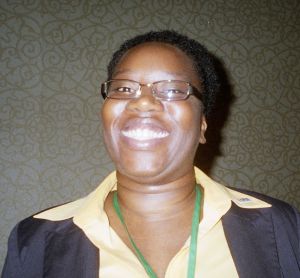
Giselle John, Public Allies Alumna. (Excellent speaker, so inspirational. She fills up the room with her

Public Allies Alumna Giselle John

Public Allies Alumna Giselle John

passion.)  She says she is a return on that Federal investment in communities (national service funding). Says her job on the panel is to be the living testimony of the value of national service. “It’s a conversation worth having.” When she found Public Allies New York, she was aging out of foster care, held down a $5.15 an hour job, was going to be homeless — again — because she couldn’t afford to rent a place. Public Allies bridged the gap between foster care and her public service career. Public Allies helped her learn to serve her community. Annie E. Casey Foundation consultant serving three county sites working on foster care issues. (Throughout the Summit, the most impressive speakers have been the national service alumni, from Mallory Josol, to Chris Dodd, to Giselle. Nice going, Alums!)

AnnMaura Connolly, Sr. Vice President, Public Policy and Special Initiatives, City Year. How we build support is by sharing stories, understanding the impact on the Corps members as well as the people they serve. We haven’t done a good enough job of sharing stories of participants and communities. During times when AmeriCorps funding has been threatened, it clearly revealed what would happen if AmeriCorps funding were pulled out. An example is Giselle John telling her story. Alumni can tell their story more powerfully than anyone else.

Rep. Chris Shays (R-CT) Don’t give up on Republicans because it won’t happen without them. If any party should promote public service, it should be Republicans. Rush Lumbaugh scoffs at the idea of paying volunteers; he feels if you pay them they won’t do it for free. But look at alumni and what they are doing. One paid volunteer can leverage thousands of unpaid volunteers. Don’t assume members of Congress know what you are talking about with respect to how national service works and how AmeriCorps is funded. Show respect and explain it to them.

Moderator: At the Republican National Convention, day two was “Service Day” and day three was “Mock Community Organizing Day.” As McCain pointed out at the Service Nation Summit Presidential Forum, Columbia University encourages some service but doesn’t have on-campus opportunities to choose Reserve Officers’ Training Corps (ROTC). Is the bi-partisan support problem that of language? Can we come up with a definition of service that can resonate with all of us?

Carolyn McCarthy called the nonprofit sector the knitting of the community. So as a member of Congress she works with nonprofits. If national service proponents can win over the Congressional staff, the staff will get to the Member of Congress. Everyday McCarthy said she would go across the aisle and explain what she was trying to do to Republicans, until they began to understand and come on board.

Chris Dodd said it’s not about how you vote (in agreement with, or against) another Senator, it’s about the relationship with another Senator. A disappointment these days is that Congress can’t functions on a level of community because the community doesn’t have time to build. It used to Senators got paid for one round trip home per year, and because of that, they got to know others in the Senate. He said, you went to Washington and you stayed. Now people come in for part of the week and fly home; they don’t know each other that well. (This statement makes me wonder: When did this start to change; can we trace the current gridlock we see currently to this trend?) Fast food analogy: if two major fast food chains destroy each other by running constant commercials about how unhealthy and disgusting each other’s food is, all that happens is the industry of fast food will self-destruct. No one would want to eat fast food anymore. Same thing is happening in politics. People are losing their interest in either side.

Moderator: The Corporation for National and Community Service recently released a study that show that two-thirds of AmeriCorps Alums have entered nonprofit and public sector careers. Does this trend resonate with both sides?

AnnMaura Connolly says we need people in every sector who understand community issues. Private companies, academia, etc.

Moderator: In a time of rising deficits, how do we make national service a must-fund agenda?

Rob Portman says that we use national service to meet needs we have to meet anyway, in a more cost effective way.

Chris Dodd says that the government merely creates the architecture so that volunteer work can be rewarded. It’s a mosaic of organizations that grows and manages the programs rather than the government trying to manage everything.